
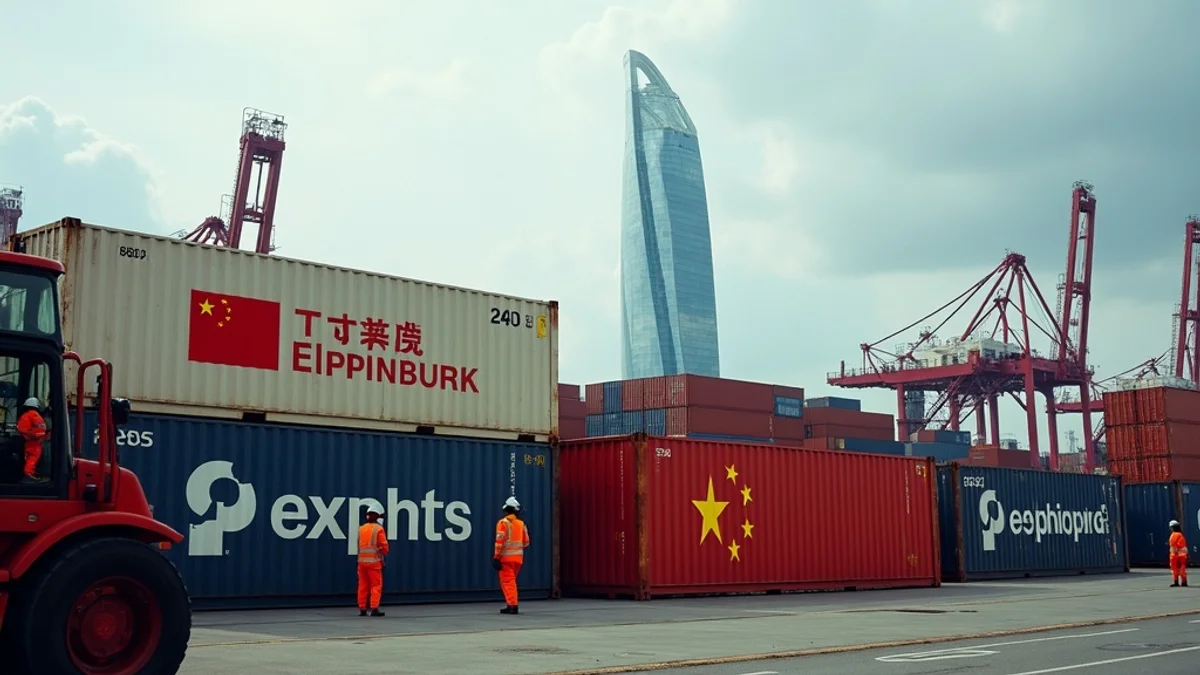
Germany's export-driven economy faces significant challenges from China, as recent data indicates exports fell by 1.2% in August 2023, highlighting a potential slowdown in demand from one of its largest trading partners. This decline is particularly concerning given Germany's reliance on exports, which account for around 47% of its GDP. Worsening trade dynamics with China could impact the eurozone's economic stability.
China's Trade Relations with Germany: A Downward Trend
China's economic recovery has been slower than anticipated, directly affecting Germany's exports. The Chinese economy grew by just 4.9% in Q2 2023, down from last year's growth rate of 12.7%. As the largest destination for German goods in Asia, any dip in Chinese demand puts more pressure on Germany's already fragile economic landscape.
Exports of machinery and vehicles, crucial sectors for Germany, have seen notable declines. In the first half of 2023, car exports to China decreased by approximately 5.5%, reflecting changing consumer preferences in the Chinese market.
EUR/USD Response to Export Data
The euro faced volatility against the US dollar following the export figures. The EUR/USD pair initially dipped to 1.0700 before rebounding slightly, closing at around 1.0750. Traders reacted to the news, adjusting their positions amid concerns that continued weak demand from China could lead to further economic slowdown in Germany.
As Germany's export sector struggles, analysts predict that the European Central Bank (ECB) may reconsider its monetary policy. If pressure on exports continues, the ECB might be compelled to lower interest rates to stimulate growth, impacting the euro's value against other currencies.
Impacts on German Manufacturing and Employment
The downturn in exports poses significant risks to Germany's manufacturing sector, which employs approximately 8 million people. A sustained decrease in demand could lead to reductions in workforce and investment. Companies like Volkswagen and Siemens, already facing challenges from global supply chain disruptions, may have to implement cost-cutting measures, including layoffs.
In response to evolving market conditions, firms are exploring diversification strategies to mitigate reliance on the Chinese market. Many manufacturers are shifting focus toward Southeast Asia and other emerging markets to capture new opportunities.
Looking Ahead: Key Economic Indicators to Watch
Traders should monitor upcoming economic indicators that may influence Germany's export landscape. The PMI (Purchasing Managers' Index) data for September 2023 will be critical in assessing the health of the manufacturing sector. Any shifts in trade policy between the EU and China could also impact future export levels.
As economic conditions shift, the next key price level for the EUR/USD pair to watch is 1.0800, a threshold traders will keep a close eye on for potential breakouts or reversals.