

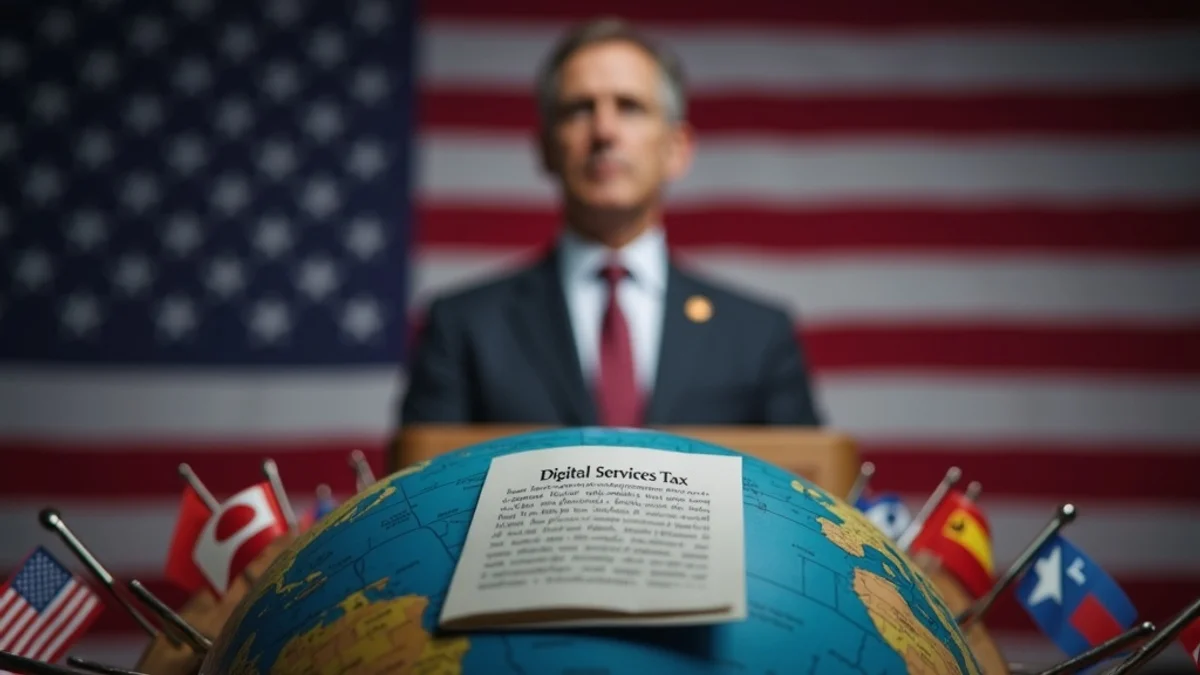
President Donald Trump recently issued a stark warning of implementing a 100% tariff on goods from countries that adopt a digital services tax. This announcement has significant implications, potentially overriding existing trade agreements and altering the landscape of international commerce.
Trump Warns of Tariff Impact on Global Trade
During a press conference, Trump emphasized that the proposed tariffs would target nations imposing taxes specifically aimed at technology companies, such as Google and Facebook. This move stems from increasing scrutiny of how large tech firms operate abroad and their tax contributions. If enacted, these tariffs could drastically increase the cost of imports from affected countries, creating ripples through global supply chains.
The U.S. has been at odds with several nations, particularly in Europe, over digital taxes that some lawmakers argue discriminate against American tech giants. Countries like France and the UK have initiated or proposed such taxes, leading to heightened tensions. If Trump proceeds with these tariffs, it would signal a decisive shift in the U.S. stance on trade, particularly concerning the tech sector.
Impact on Key Currency Pairs: USD and EUR
Financial markets reacted immediately to Trump’s warning, especially with the euro gaining slightly against the dollar. The EUR/USD pair saw movement as traders weighed the potential consequences of tariffs on the economic outlook. A 100% tariff would not only affect tech firms but could also lead to retaliatory measures, escalating trade tensions and impacting currency valuations.
As the situation develops, the U.S. Dollar Index (DXY) is likely to reflect volatility, depending on how international partners respond. A stronger euro could shift investor sentiment, pushing the USD weaker and affecting commodities priced in dollars.
Digital Services Tax: A Growing Global Trend
The discussion around digital services taxes extends beyond the U.S. and Europe. Countries worldwide are grappling with how to tax multinational corporations that often pay lower taxes compared to domestic companies. Currently, nations including Italy and Spain are contemplating similar measures, which could lead to a patchwork of digital taxes globally.
Trump's warning brings urgency to ongoing negotiations within the Organization for Economic Cooperation and Development (OECD), which aims to find a unified global framework for taxing digital businesses. Without an accord, national measures like the digital services tax could proliferate, complicating international trade and compliance for businesses.
Markets Awaiting Further Developments
Investors find themselves in a holding pattern, waiting to see how various governments will react to Trump's tariffs. The fear of escalating trade wars could influence equity markets, with tech stocks under particular scrutiny. The S&P 500 tech sector has been one of the strongest performers, but uncertainty surrounding tariffs could change that status quickly.
Looking ahead, analysts are focused on potential retaliatory measures from affected countries and further clarification from the Trump administration. Any developments could shift trading positions and influence broader market trends. The upcoming talks at OECD meetings could be pivotal, providing a venue for countries to address these contentious issues.
With tensions between the U.S. and its trading partners rising, traders and investors must keep a close eye on these developments as they unfold.