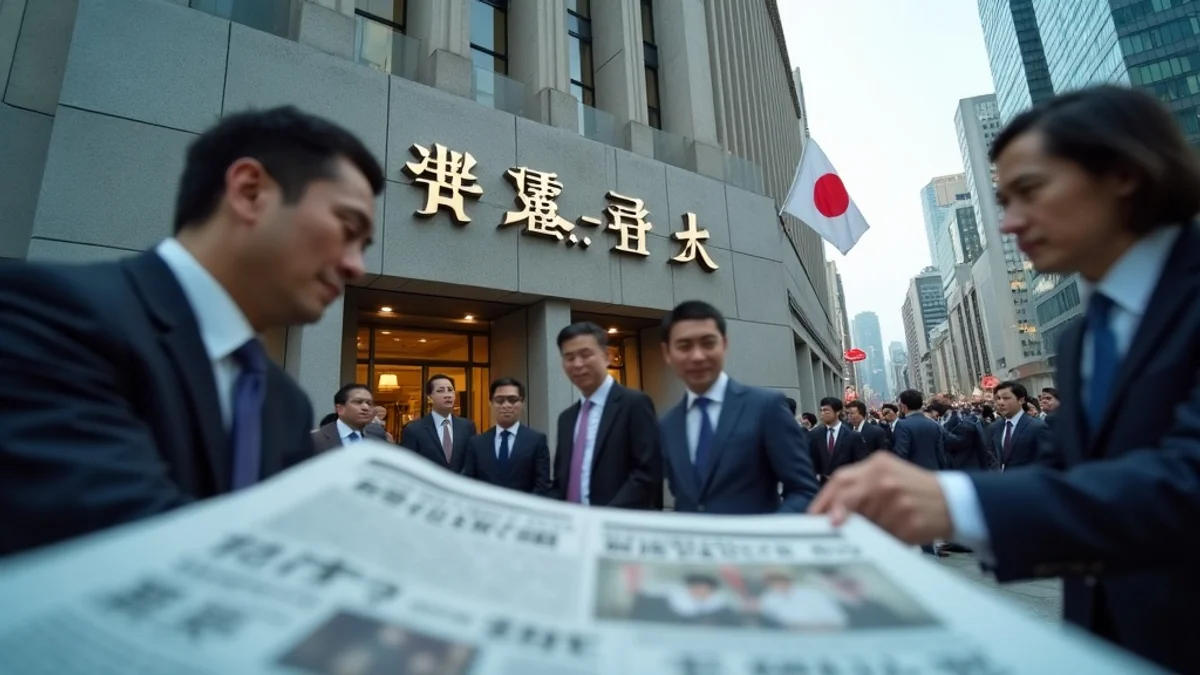


South Korea's financial regulators are on high alert as stock market volatility has surged, raising concerns about potential risks to the economy. The Korea Composite Stock Price Index (KOSPI) closed at 2,200.45 on October 25, 2023, down 2.1% for the day, reflecting a significant decline from its recent peak of 2,400 in mid-September. This sharp drop has raised alarms within the government, leading to increased scrutiny over market fluctuations and investor behavior.
South Korea's KOSPI Falls 2.1%, Marking a Key Inflection Point
The KOSPI's recent decline follows a tumultuous month marked by selling across multiple sectors. Investors reacted to fears regarding external economic pressures, including rising interest rates globally and potential slowdowns in major economies. The index's fall below the crucial psychological level of 2,200 may further affect investor sentiment, as analysts warn that breaches of significant support levels often trigger more selling.
Currency Markets React as South Korea's Won Weakens
The South Korean won has also taken a hit, trading at 1,380 against the US dollar, a steep depreciation of 1.5% from the previous week. This decline reflects investor caution regarding the health of the domestic economy amid external pressures. The weakening won makes imports more expensive, impacting inflation rates that have remained stubbornly high. Analysts suggest that a sustained period below 1,400 could shift focus back to the Bank of Korea's monetary policy adjustments.
Government’s Response: Increased Monitoring of Market Dynamics
In response to heightened volatility, the South Korean government has announced stricter oversight of financial markets. The Financial Services Commission (FSC) and the Bank of Korea (BOK) will closely monitor trading patterns and liquidity levels to identify risks proactively. The FSC emphasized the need for transparency among market players, especially as speculative trading increases during volatile periods.
Economic Indicators to Watch: Q3 Earnings and Global Trends
As South Korea confronts these market challenges, upcoming Q3 earnings reports will provide critical insight into the resilience of domestic corporations. Analysts expect sectors such as technology and exports to be particularly scrutinized. Companies like Samsung and LG are set to report earnings next week, and any significant revisions in guidance could impact the KOSPI's trajectory.
Traders should keep an eye on key economic indicators, including inflation data and interest rate decisions from the Bank of Korea, scheduled for release on November 15. A potential interest rate hike could further influence both the stock and forex markets.