
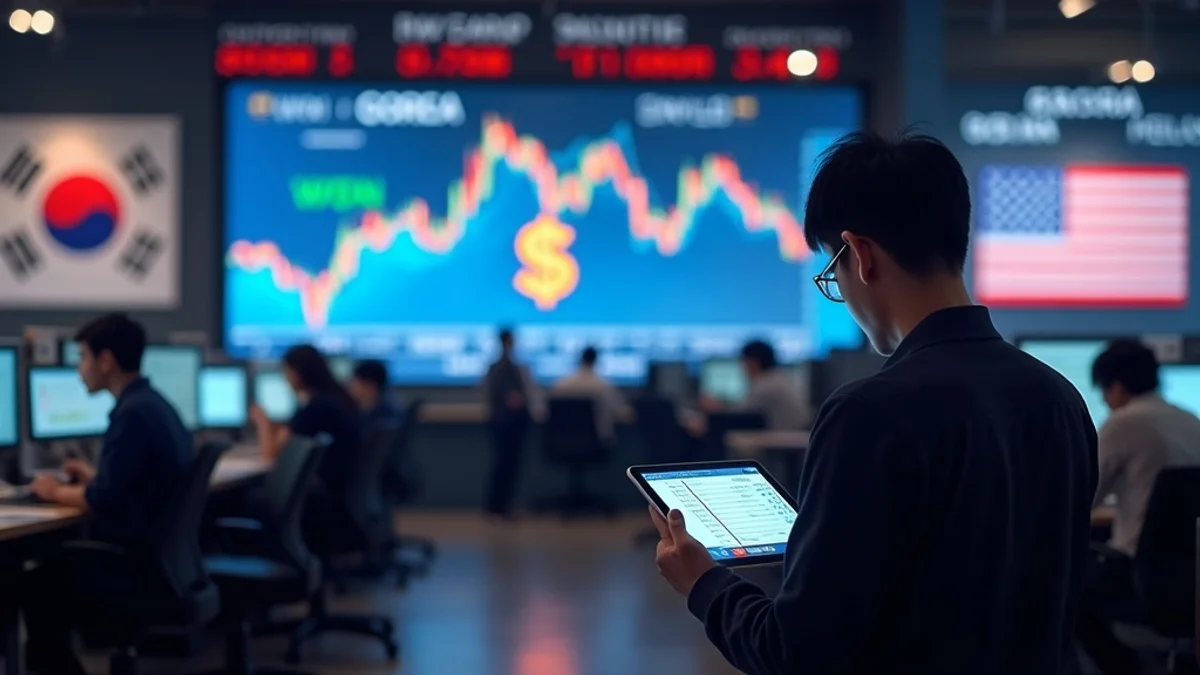
South Korea has officially launched 24-hour trading of the dollar-won (USD/KRW) currency pair as of October 1, 2023. This development allows forex traders to engage with this vital currency pair at any time, reflecting a broader trend towards increased accessibility in global markets. The move positions South Korea as a more competitive player in the forex market, particularly amid regional and global trading dynamics.
Benefits of 24-Hour Trading in South Korea
The introduction of round-the-clock trading aims to enhance liquidity and attract foreign investment. Previously, dollar-won trading was limited to specific hours, restricting opportunities for traders looking to capitalize on market fluctuations. Now, with 24-hour access, traders can react to global economic news, geopolitical events, and market shifts without the constraints of a fixed trading schedule.
The opening of the market around the clock is expected to increase volume in the USD/KRW pair, offering participants better pricing and tighter spreads. This move aligns South Korea with major financial hubs like New York and London, boosting its status as a legitimate trading center.
Market Reaction to New Trading Hours
Initial reactions from traders have been positive. The USD/KRW pair experienced a surge in trading activity, with the exchange rate hovering around 1,350 won per dollar shortly after the launch. Increased volatility is anticipated as traders adjust to the new framework, potentially leading to more aggressive trading strategies.
Market observers noted a rise in interest from international players, who may view this development as an opportunity to diversify their portfolios. With the Korean won being one of the more stable currencies in the Asian market, the appeal of 24-hour trading could further solidify its standing.
Implications for USD/KRW Traders
The shift to 24-hour trading significantly alters strategies for the USD/KRW pair. Traders can respond to U.S. economic data releases and Federal Reserve announcements in real time, leading to greater volatility during key events. For instance, if the Federal Reserve signals an interest rate hike, traders can act immediately, potentially capitalizing on rapid price shifts.
Local economic indicators will now have a more pronounced impact during off-hours. If South Korea releases stronger-than-expected GDP growth figures at night, traders can respond instantly, adjusting their positions based on the latest data.
Future Considerations for the Korean Market
Looking ahead, attention will focus on how this expanded trading window influences South Korea's economic stability and trade relations. Traders and analysts will closely monitor USD/KRW fluctuations, especially during times of geopolitical tension or economic uncertainty. Establishing a robust framework to support this 24-hour trading model will be essential for South Korea's continued growth in the forex sector.
As market participants adapt to these new trading hours, their response to upcoming economic indicators, particularly from the U.S. and South Korea, will provide insights into how this unprecedented change affects trading volume and volatility in the USD/KRW pair.