

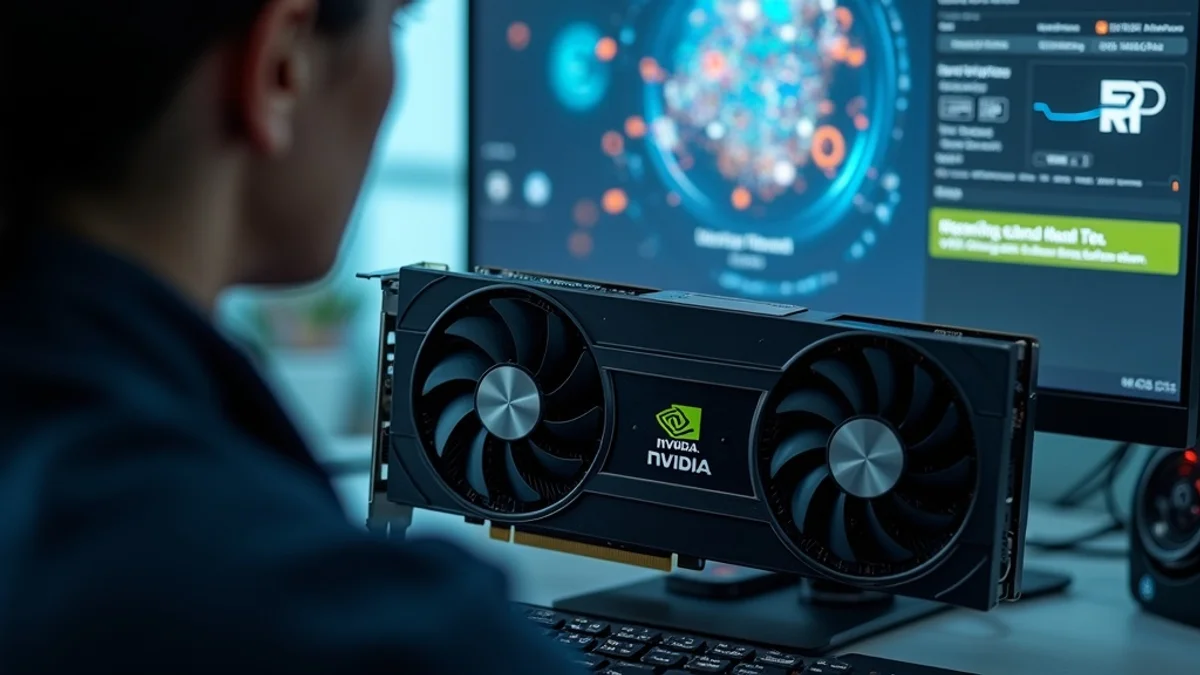
Nvidia (NVDA) shares are up 5.94% year-to-date as of July 2, but a deeper analysis suggests investors are missing critical aspects of the company's long-term strategy. While Nvidia's performance appears solid compared to the SPDR S&P 500 index (SPY), which climbed 9.36% in the same timeframe, understanding Nvidia's roadmap is crucial for maximizing investment potential.
Nvidia Revealed: Key Developments in AI and GPUs
Nvidia unveiled its plans to dominate the artificial intelligence (AI) and graphics processing unit (GPU) markets during its recent investor call. The company is expanding its AI ecosystem, expected to generate significant revenue. Nvidia's data center revenue reached $3.75 billion in the first quarter of fiscal 2024, marking a 30% year-over-year increase. This trend reflects Nvidia’s transition from a traditional GPU manufacturer to a leader in AI technologies, a move that could double its market share by 2025, according to some analysts.
Stock Performance Amidst AI Momentum
Despite the excitement surrounding AI, Nvidia's stock has shown volatility. After hitting an all-time high of $481.75 in early June, shares have pulled back, currently trading around $430. Investors are reacting to broader market sentiments and Nvidia’s specific challenges in scaling production and meeting demand. The Nasdaq composite index, which includes Nvidia, has risen 12% this year, indicating a robust tech sector, yet Nvidia's unique challenges call for cautious optimism.
Competitive Landscape: AMD and Intel Response
The competitive landscape is heating up as AMD and Intel ramp up efforts in AI and GPU sectors. AMD's latest GPU offering, the Radeon RX 7000 series, aims to challenge Nvidia's dominance, while Intel is exploring integrated AI capabilities across its processors. Analysts view these developments as potential threats to Nvidia's market share. Investors should closely monitor how Nvidia counteracts these challenges while executing its long-term strategy.
Investor Sentiment and Future Outlook
Investor sentiment appears mixed, with many still optimistic about Nvidia's long-term potential despite short-term fluctuations. Analysts predict that Nvidia could capture a significant portion of the AI market, valued at $1 trillion by 2030. However, maintaining its competitive edge will be critical, especially in rolling out new products while managing production bottlenecks.
Looking ahead, Nvidia's strategic initiatives suggest the company is positioned for growth. Investors should watch for the upcoming earnings report scheduled for mid-August, which will shed light on how Nvidia is navigating market demand and competitive pressures.