

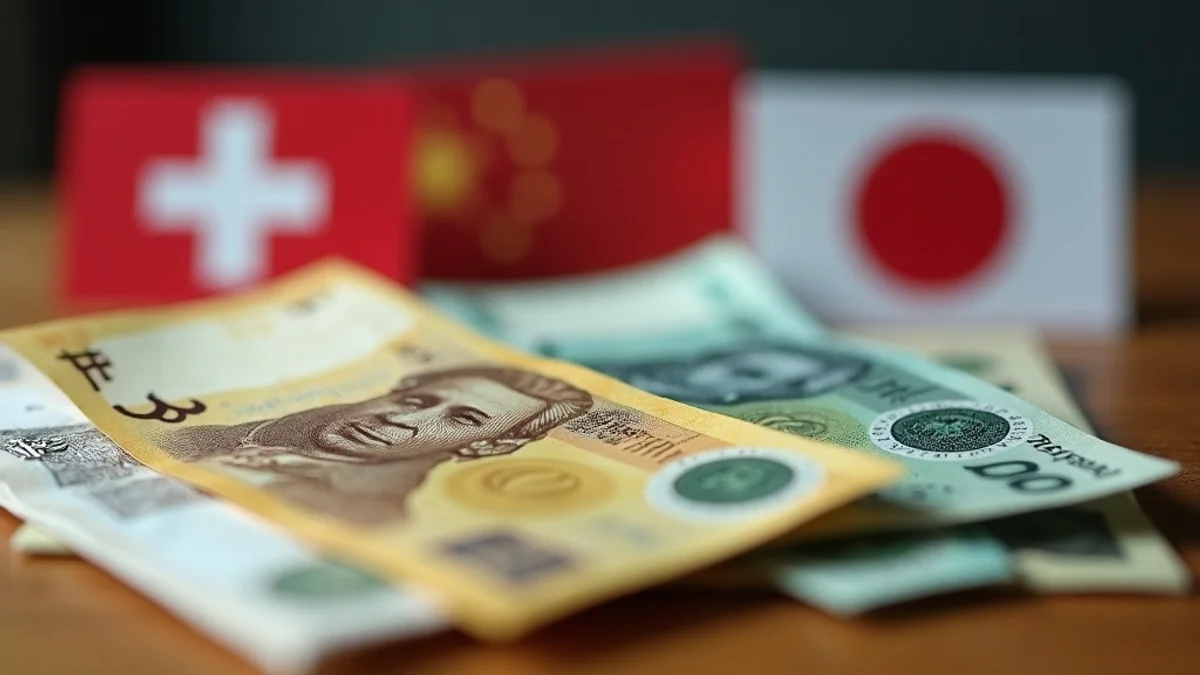
The Swiss franc and Japanese yen strengthened against the dollar following a market reaction to DeepSeek, a Chinese start-up, unveiling a new AI model that rattled U.S. tech stocks. On October 12, the yen climbed to ¥130.25 per dollar, while the Swiss franc traded at 0.90 Swiss francs to the dollar as investors shifted focus to safe havens amid rising volatility in technology markets.
DeepSeek's AI Breakthrough Shakes Investor Confidence
DeepSeek's announcement sent a shockwave through Wall Street, particularly affecting tech giants. Stocks such as Apple and Microsoft saw declines of approximately 2% in after-hours trading. The noise surrounding this new AI model amplifies concerns that emerging technologies could disrupt established players—a sentiment echoed through the S&P 500’s tech sector, which has been under pressure lately.
With the Nasdaq Composite down about 1.5% on the day, analysts are watching closely to see if this pullback signals a broader correction. The overarching question is whether the excitement around AI will translate into sustainable growth or if it’s merely a speculative bubble.
Safe Havens Gain Traction Amid Uncertainty
As the tech sector faltered, investors flocked to traditional safe havens. The yen's rise is particularly noteworthy; it gained 0.9% against the dollar in a single day. Traders often seek the yen in times of geopolitical tension or economic uncertainty, and this trend is proving true once again.
The Swiss franc's strength also highlights a flight to safety. The currency has long been viewed as a stable asset during turbulent times, and its recent performance reflects that perception. This uptick in safe-haven currencies may signal broader market anxiety as investors reassess risk amid potential disruptions.
Impacts on Global Markets and Investors
For equity investors, the implications are clear. If the tech sector continues to face headwinds, diversifying portfolios with stable assets like the Swiss franc or yen could be prudent. Sectors typically resilient during downturns, such as utilities and consumer staples, may offer a buffer against volatility.
International investors should keep an eye on movements in foreign exchange markets. The relative strength of the yen and Swiss franc could influence investment decisions, especially for those with exposure to U.S. markets. Understanding currency dynamics is vital for minimizing risk and maximizing returns.
What’s Next for the Markets?
Moving forward, all eyes will be on the tech sector’s resilience. Investors will likely be parsing earnings reports closely in the coming weeks, especially from companies like Alphabet and Amazon, which are scheduled to release quarterly results soon. Any sign that AI investments are yielding tangible returns could change the narrative for the sector.
Macroeconomic factors such as Federal Reserve policy and global economic data will significantly shape market sentiment. The Federal Reserve’s next meeting, set for late October, could provide crucial insights on interest rates and inflation, further influencing equity and currency markets.
In this uncertain environment, staying attuned to both tech trends and macroeconomic indicators will be essential for prudent investing. With rising tensions in the markets, strategic positioning will be key in navigating upcoming challenges.